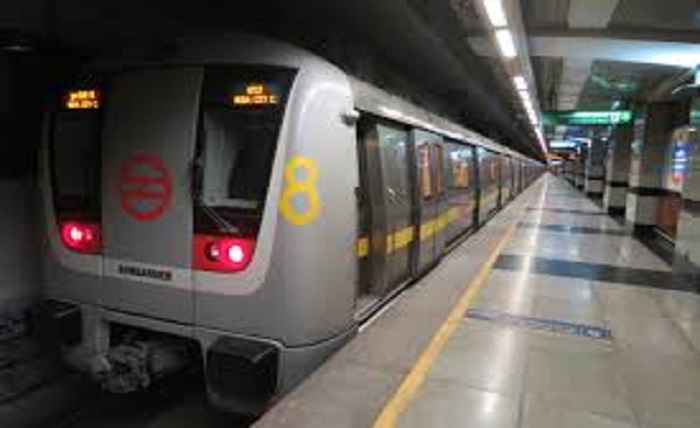
Navigating the sprawling metropolis of Delhi and its surrounding National Capital Region (NCR) can be a daunting task. With its intricate web of streets, crowded markets, and historic landmarks, finding an efficient way to traverse the city is essential for both daily commuters and tourists. This is where the Delhi Metro comes in as a modern lifeline, transforming how millions travel each day. To truly harness the power of this extensive network, one tool is indispensable: a high quality full size Delhi Metro map. This guide will delve into everything you need to know about obtaining and using this crucial navigational aid.
The Delhi Metro Rail Corporation (DMRC) has constructed one of the largest and busiest metro systems in the world. As of 2025, the network boasts over 394 kilometers of track, 289 stations, and serves more than 6.5 million passengers daily. This complexity makes a map absolutely essential. A high quality full size Delhi Metro map is not just a simple diagram; it’s a comprehensive key to unlocking the city, plotting your course from historical hubs like Kashmere Gate to business centers in Gurugram and technological parks in Noida. A low-resolution image might give you a general idea of the network, but a high-quality, full-size version is required for the kind of clarity needed for practical, daily navigation and seamless journey planning.
The Critical Need for a High Quality Full Size Delhi Metro Map
Why settle for anything less than a high quality full size Delhi Metro map? The sheer scale of the network demands it. With multiple color-coded lines crisscrossing the capital—from the longest Pink Line to the rapid Airport Express—a blurry or small image can be almost useless when you’re standing in a crowded station trying to figure out the best interchange point for your destination. A full-size map provides the necessary detail to differentiate between the Blue Line’s main branch to Noida Electronic City and its extension to Vaishali. High quality ensures the text is legible, the station names are clear, and the complex interactions between lines at major hubs like Rajiv Chowk and Hauz Khas are easily understood. Without this clarity, you risk missing your stop or taking a significantly longer route.
Moreover, a high quality full size Delhi Metro map is invaluable for understanding the network beyond just the lines themselves. It clearly identifies interchange stations—the lifeblood of the system—allowing you to plan multi-line journeys with ease. These maps often include details about station layouts, exits, and connections to other forms of transport, which is information you simply cannot get from a simple route list. For a system where knowing whether to get off at Mandi House or Central Secretariat can save you significant time, the detail provided by a superior map is not just a luxury; it’s a necessity for effective travel.
Deciphering the Colors and Lines on a High Quality Full Size Delhi Metro Map
The most striking feature of any high quality full size Delhi Metro map is its color-coded system. Each line is assigned a distinct color and number, making it easy to follow your route visually. This is the backbone of the map’s usability. For example, the Red Line runs from Rithala to Shaheed Sthal (New Bus Adda), providing a crucial east-west corridor. The Yellow Line cuts a north-south swath from Samaypur Badli down to Millennium City Centre in Gurugram, passing through central hubs like New Delhi Railway Station.
A high quality full size Delhi Metro map will clearly differentiate between the main and branch lines, such as the Green Line, which has a main branch from Kirti Nagar to Brigadier Hoshiar Singh and a branch from Ashok Park Main to Kirti Nagar. It also showcases vital lines like the fast Airport Express (Orange Line), connecting New Delhi Railway Station to the IGI Airport in approximately 19 minutes, and the Magenta Line, which links Janakpuri West to Botanical Garden. Understanding the visual language of the map—thick lines for main routes, thinner lines for branches, and marked circles for interchange stations—is the first step to becoming a proficient Delhi Metro traveler. These charts often show that the network consists of around 10-12 operational lines, though some guides consider the Blue Line extension as a separate line.
How to Access a High Quality Full Size Delhi Metro Map
Accessing a reliable high quality full size Delhi Metro map has never been easier, thanks to both official and third-party digital resources. The most authoritative source is undoubtedly the Delhi Metro Rail Corporation (DMRC), which releases official network maps that are updated to reflect new station openings and line extensions. These can often be downloaded as high-resolution PDFs from the official website, perfect for printing at home or storing on your phone for offline use.
For on-the-go access, numerous mobile applications are built around providing a high quality full size Delhi Metro map. These apps, such as ‘Delhi Metro Route Map’ and ‘Delhi Metro Navigation Guide,’ offer features far beyond a static image. They often include Ultra HD maps that remain clear when zoomed in, route planners that find the shortest path, and offline functionality, which is a boon for travelers without constant internet access. Websites like ixigo and ConfirmTkt also provide interactive maps and detailed line information, serving as excellent online references for planning journeys before you even step into a station. Whether you prefer a tangible paper copy, a high-resolution PDF, or a feature-packed mobile app, the ideal high quality full size Delhi Metro map is readily accessible.
Key Interchange Stations Featured on the High Quality Full Size Delhi Metro Map
The effectiveness of a high quality full size Delhi Metro map is most apparent in how it represents the network’s critical interchange stations. These are the junctions where multiple lines meet, allowing passengers to switch between different routes to reach their final destination. Major hubs like Kashmere Gate are particularly prominent on the map, serving as a massive interchange for the Red, Yellow, and Violet Lines. Similarly, Rajiv Chowk, located in the heart of Connaught Place, is a bustling interchange for the Yellow and Blue Lines.
Other vital interchanges clearly marked on any high quality full size Delhi Metro map include Central Secretariat (connecting Yellow and Violet), Mandi House (Blue and Violet), Janakpuri West (Blue and Magenta), and Hauz Khas (Yellow and Magenta). The map helps you visualize these connections, showing you that a journey from Rohini to Noida might involve switching from the Red Line to the Yellow Line at Kashmere Gate, then to the Blue Line at Rajiv Chowk. The clarity of a high-quality map is essential here, as it shows the relative positions of these stations, helping you understand the logical flow of your journey and anticipate transfers without confusion.
The Utility of a High Quality Full Size Delhi Metro Map for Trip Planning
A high quality full size Delhi Metro map is the ultimate trip-planning tool. It allows you to see the entire network at a glance, making it possible to plot a route from point A to point B by identifying the relevant lines and transfer points. For instance, if you need to travel from the airport to a business meeting in Gurugram, the map shows you that you can take the Airport Express (Orange Line) to Dwarka Sector-21, switch to the Blue Line, and then transfer to the Yellow Line at Rajiv Chowk to reach Sikanderpur and the rapid metro into the city. This visual representation is far more intuitive than reading a list of stations. Read more about mp4moviez
Furthermore, a high quality full size Delhi Metro map aids in understanding the network’s structure, which helps in making informed decisions. It can help you decide whether to take a slightly longer but direct route with fewer interchanges or a shorter path that requires navigating a crowded transfer point like Kashmere Gate. By studying the map, you can identify which lines serve your key destinations, learn the names of stations on those lines, and become a more confident and independent traveler. The map transforms a potentially stressful commute into a straightforward navigational exercise, highlighting that the network comprises numerous lines and an increasing number of interchange stations, making the Delhi NCR more accessible than ever.
Digital vs. Physical: Accessing Your High Quality Full Size Delhi Metro Map
When it comes to obtaining a high quality full size Delhi Metro map, both digital and physical formats have significant advantages. Digital maps, available as PDF downloads or within mobile apps, offer the benefit of being constantly updated. The DMRC, along with third-party developers like the creators of “Delhi Metro Route Map,” ensure their digital maps reflect the latest network expansions, including new phases of the metro that are currently under construction. Many apps offer ultra-HD, zoomable maps that allow you to see fine details without losing clarity, a feature that is impossible with a standard paper map. They also often include additional tools like fare calculators and live station trackers.
On the other hand, a physical copy of a high quality full size Delhi Metro map is a timeless and reliable resource. It doesn’t require a charged battery or an internet connection and can be a permanent fixture on a wall for quick reference. A large, printed map can be incredibly useful for groups planning a trip, allowing everyone to see the route at the same time. The best approach for a frequent traveler is to use both: download a high-resolution PDF or a feature-rich app for on-the-go navigation, and perhaps keep a printed version at home or the office for longer-term planning and visual reference. This ensures you always have a high quality full size Delhi Metro map at your fingertips, regardless of the situation.
The Future of the Delhi Metro and Its Map
The story of the Delhi Metro is one of constant growth, and a high quality full size Delhi Metro map must evolve alongside it. Phase IV of the DMRC’s development plan is currently underway, with 110 kilometers of new track and 83 stations under construction. As these new lines and extensions—which will further connect the fringes of the city and improve accessibility in underserved areas—become operational, the official map will be updated to include them. This is why accessing an up-to-date version is so important; an old map may not show the new Pink Line stations or the latest extension of the Grey Line.
Furthermore, the ambition doesn’t stop at Phase IV. Future expansions are always on the horizon to meet the ever-growing demands of the NCR. A high quality full size Delhi Metro map of the future will likely be even more complex, integrating new lines and possibly extending further into satellite towns. Staying informed about these changes is vital for any commuter. Following the official DMRC website or reliable metro guide apps ensures that the map you rely on is current, allowing you to benefit from the new routes as soon as they open and seamlessly integrate them into your travel plans. For now, the network stands at roughly 394 kilometers and will only continue to grow, cementing the map’s place as an essential tool.
Conclusion
Navigating Delhi is a task made simple by the vast and efficient Delhi Metro network, but the key to unlocking its full potential lies in a high quality full size Delhi Metro map. This guide has underscored the importance of having a clear, detailed, and up-to-date map, whether for understanding the color-coded lines, identifying major interchange stations like Kashmere Gate and Rajiv Chowk, or planning a complex multi-line journey. From official DMRC PDFs to feature-packed mobile applications, the ways to access this crucial tool are plentiful. As the network continues to expand with new phases and stations, ensuring you have the latest version of your map will be vital for seamless travel. With a reliable map in hand, you are well-equipped to explore the heart of India with confidence and ease.
FAQs
1. What exactly is a high quality full size Delhi Metro map and why is it important?
A high quality full size Delhi Metro map is a detailed, legible chart of the entire DMRC network that is large enough to show all station names and interconnections clearly. It is crucial because the network is vast, with over 394 km of track and 289 stations. A clear map ensures you can easily find your station, plan your route, and identify the correct interchange points, making navigation simple and reducing the risk of getting lost in the complex system.
2. How can I get an official and updated high quality full size Delhi Metro map?
The most reliable source is the official Delhi Metro Rail Corporation (DMRC) website, where you can download a high-resolution PDF of the network map. Additionally, several reputable mobile apps like “Delhi Metro Route Map” and “Delhi Metro Navigation Guide” provide official or regularly updated digital maps with features like offline access and route planning.
3. What are the key interchange stations I need to know on the Delhi Metro map?
Major interchange stations are the hubs where multiple metro lines meet. The most important ones include Kashmere Gate (connecting the Red, Yellow, and Violet Lines), Rajiv Chowk (Yellow and Blue Lines), Central Secretariat (Yellow and Violet), Mandi House (Blue and Violet), Janakpuri West (Blue and Magenta), and Hauz Khas (Yellow and Magenta). These are clearly marked on any high quality map.
4. Which metro line is the longest and which is the shortest on the Delhi Metro map?
The longest individual line is the Pink Line, which stretches from Majlis Park to Shiv Vihar, covering 59.242 kilometers with 38 stations. The shortest is the Grey Line, running from Dwarka to Dhansa Bus Stand, covering approximately 5.49 kilometers with just 4 stations.
5. What is the fastest metro line in Delhi and how is it shown on the map?
The fastest line is the Airport Express (Orange Line), which can reach speeds of up to 120 km/h. On the high quality full size Delhi Metro map, it is distinguished by its orange color and runs from New Delhi Railway Station to Yashobhoomi Dwarka Sector-25, with a key stop at IGI Airport Terminal 3.